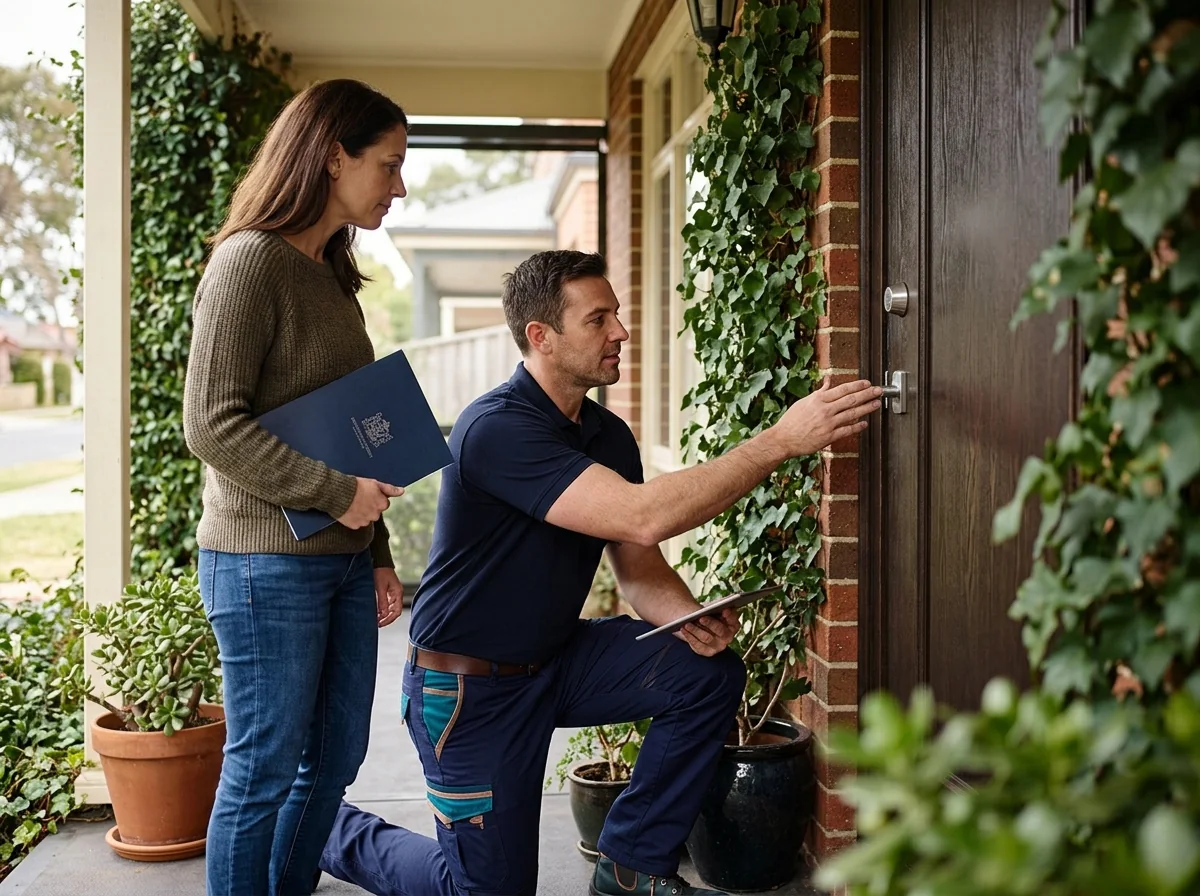
Short answer: San Bruno sits squarely in the marine-layer belt, where morning fog, damp air, and salt carried inland can quietly corrode and gum up exterior hardware over time. A short seasonal routine keeps deadbolts turning smoothly and prevents the slow decline that ends in a stuck lock and a service call.
San Bruno sits squarely in the marine-layer belt, where morning fog, damp air, and salt carried inland can quietly corrode and gum up exterior hardware over time. A short seasonal routine keeps deadbolts turning smoothly and prevents the slow decline that ends in a stuck lock and a service call.
Locks are precision mechanisms, and moisture is their long-term enemy. In San Bruno's climate, repeated cycles of foggy, humid mornings and drier afternoons let condensation work into keyways and internal springs, while airborne salt accelerates corrosion on exposed exterior deadbolts, gate locks, and garage-side door hardware. The result is rarely a sudden failure; it is a gradual stiffening where the key needs a little more wiggle each month until one day it barely turns. Because the decline is slow, most people ignore it until they are locked out, when a few minutes of seasonal care a couple of times a year would have kept the same lock smooth for many more years.
Twice a year, ideally heading into the wetter months and again as they end, give each exterior lock a short tune-up. Start by wiping down the exterior hardware to remove grit and salt film, then work the key in and out a few times to feel for roughness. For lubrication, reach for a dry PTFE or graphite-based lock lubricant rather than a general-purpose oil like WD-40, because oily products attract dust and grit that eventually cake inside the cylinder and make sticking worse. Apply a small amount into the keyway, insert and turn the key several times to distribute it, and wipe away any excess. Finish by tightening any loose screws on the lock face, strike plate, and hinges, since a door that has sagged even slightly forces the bolt to bind against the frame.
A lock does not operate in isolation, and many 'bad lock' complaints are really alignment problems. Seasonal humidity can cause wooden doors and frames to swell, shift, and settle, so the deadbolt that slid home easily in summer may start catching the strike plate in a damp winter. Check that the bolt lines up cleanly with its hole in the frame and that you do not have to lift or shove the door to lock it, because forcing a misaligned bolt puts strain on the whole mechanism. If you notice binding, resistance that appears only in certain weather, or a key that has to be jiggled to catch, treat those as early warnings worth addressing during your routine rather than problems to power through until the lock finally gives out.
Locks are precision mechanisms, and moisture is their long-term enemy. In San Bruno's climate, repeated cycles of foggy, humid mornings and drier afternoons let condensation work into keyways and internal springs, while airborne salt accelerates corrosion on exposed exterior deadbolts, gate locks, and garage-side door hardware. The result is rarely a sudden failure; it is a gradual stiffening where the key needs a little more wiggle each month until one day it barely turns. Because the decline is slow, most people ignore it until they are locked out, when a few minutes of seasonal care a couple of times a year would have kept the same lock smooth for many more years.
Twice a year, ideally heading into the wetter months and again as they end, give each exterior lock a short tune-up. Start by wiping down the exterior hardware to remove grit and salt film, then work the key in and out a few times to feel for roughness. For lubrication, reach for a dry PTFE or graphite-based lock lubricant rather than a general-purpose oil like WD-40, because oily products attract dust and grit that eventually cake inside the cylinder and make sticking worse. Apply a small amount into the keyway, insert and turn the key several times to distribute it, and wipe away any excess. Finish by tightening any loose screws on the lock face, strike plate, and hinges, since a door that has sagged even slightly forces the bolt to bind against the frame.
A lock does not operate in isolation, and many 'bad lock' complaints are really alignment problems. Seasonal humidity can cause wooden doors and frames to swell, shift, and settle, so the deadbolt that slid home easily in summer may start catching the strike plate in a damp winter. Check that the bolt lines up cleanly with its hole in the frame and that you do not have to lift or shove the door to lock it, because forcing a misaligned bolt puts strain on the whole mechanism. If you notice binding, resistance that appears only in certain weather, or a key that has to be jiggled to catch, treat those as early warnings worth addressing during your routine rather than problems to power through until the lock finally gives out.
Call (650) 489-0999 and describe the situation, your exact location, and what you need. Timing is confirmed on that call rather than promised in advance.
Call for help: (650) 489-0999 — a straight answer and an honest estimate before any work begins.