
01
Verify identity and authority before access
California regulates locksmith activity. Consumers can use the Department of Consumer Affairs license-search service to check a company or individual record instead of relying on a badge, advertisement, vehicle graphic, or verbal claim. This site does not publish an unverified license number.
Entry work should pause until the requester can show identity and a lawful connection to the property or vehicle. Depending on the situation, useful evidence may include a matching address, lease, registration, title, company authorization, property-management contact, or another reliable record.
Unclear authority is a stop condition. A locksmith request is not only a mechanical task; it can grant control over a protected space or vehicle. Clear authorization protects the customer, the property owner, and the technician performing the work.
02
Start with the access objective
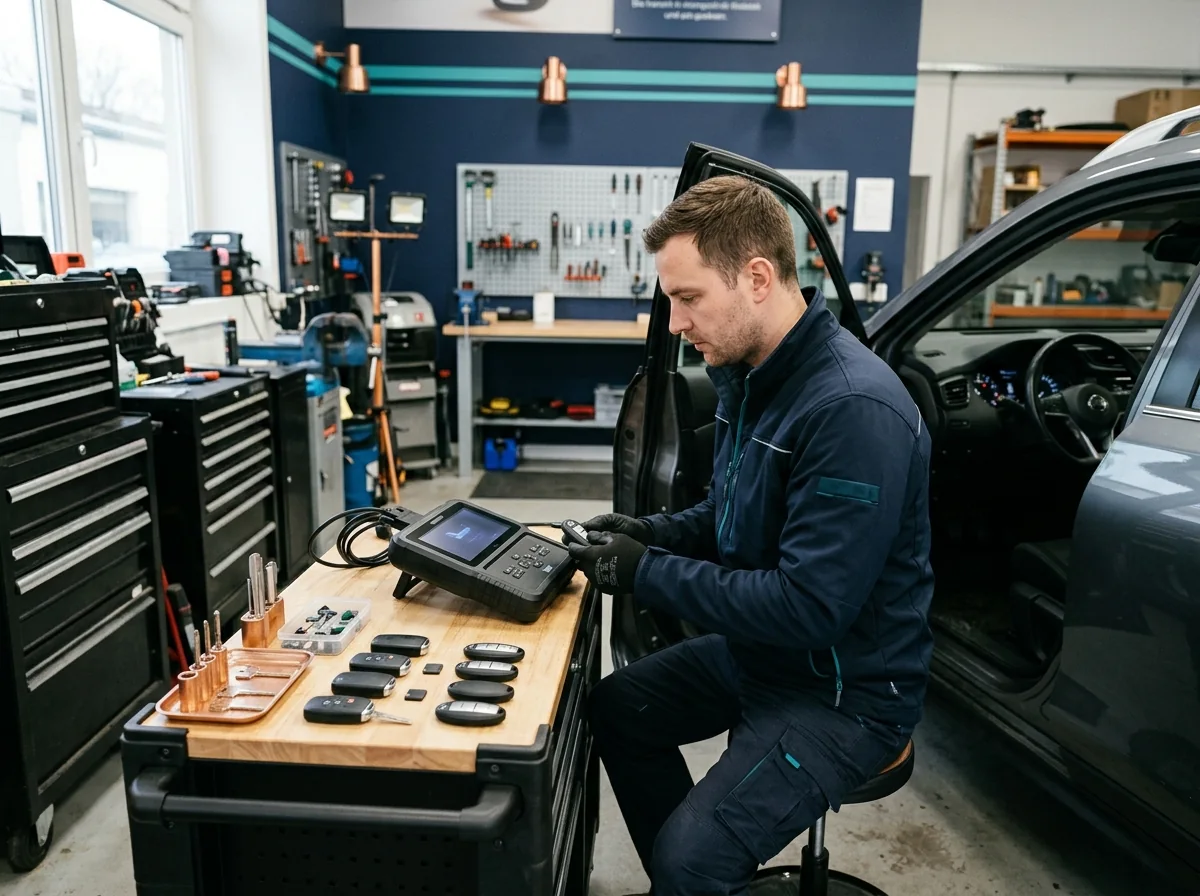
Define the objective of car key replacement is not a guessed part or a dramatic promise. It is a lost, broken, stolen, worn, or nonresponsive vehicle credential. State who needs access, what must remain secure, and whether the request involves a home, managed property, business, or vehicle.
The working system may include ownership, vehicle identity, key type, emergency blade, transponder, remote board, battery, and immobilizer. The correct scope considers each one; one symptom does not automatically justify drilling, replacement, programming, or a complete hardware change. A careful request separates the immediate access need from the longer-term security decision.
A defensible plan will restore only authorized functions and document which old credentials remain active. That objective keeps the scope tied to authorization and function. It also gives the customer a clear basis for comparing what is proposed, what remains unchanged, and what evidence will show the work succeeded.
03
Compare the least destructive options
A strong car key replacement assessment explains the available paths in order: adjustment or diagnosis, non-destructive entry, rekeying, component repair, replacement, cutting, or programming. Not every path applies, and the least destructive lawful option should be considered before irreversible work.
Separate the promised outcome from the tool being used. Rekeying changes which key operates a serviceable cylinder; replacement changes hardware; programming authorizes an electronic credential; opening restores access but may not correct a worn or damaged lock. These are different outcomes and should not be sold as interchangeable.
The pre-work explanation should include labor category, hardware or key type, programming if any, taxes or additional conditions, what verification is required, and how completion will be tested. Avoid universal online price claims that ignore the actual lock, door, vehicle, or authorization context.
04
Describe the problem without forcing it
For car key replacement, document the current condition before trying repeated keys, codes, remote commands, or improvised tools. Note what worked last, whether the change was sudden, and whether there is visible impact, wear, corrosion, misalignment, a broken fragment, or an electronic warning.
Observe the relevant chain: ownership, vehicle identity, key type, emergency blade, transponder, remote board, battery, and immobilizer. Describe which parts respond and which do not. A key that enters but will not turn is different from a key that no longer enters, a deadbolt that binds only when the door is closed, or a vehicle that unlocks but will not authorize a start.
End do-it-yourself checks before they bend the key, push a fragment deeper, damage a door edge, trigger an alarm, trap someone, or erase useful diagnostic evidence. Photographs can document visible conditions, but they should not require dismantling a lock or exposing private credentials.
05
Prepare the information that saves time
When requesting car key replacement, provide the exact city and location, a safe callback number, and a concise description of a lost, broken, stolen, worn, or nonresponsive vehicle credential. For a vehicle, include year, make, model, key type if known, and whether every key is lost. For property, identify the door and your authority to control it.
Planning changes when the site has a gated property, managed building, alarm procedure, airport or parking restriction, loading access, shared entrance, child or pet inside, broken glass, compromised door, or another condition that changes how the request must be handled.
Call (650) 489-0999 for direct routing or use the secure form. Do not place sensitive identity documents, alarm codes, payment-card data, or complete vehicle identifiers in the message. Those details can be verified through the appropriate secure process when required.
06
Local context and a clear completion check
San Bruno sits between US-101 and I-280 beside the SFO corridor. Homes, apartments, small businesses, airport-area properties, and mixed-use buildings create different access needs. Exact location matters because a city name alone may not identify the property entrance, parking access, building rules, or the correct authorized contact.
Do not close the job until the outcome will restore only authorized functions and document which old credentials remain active. Test normal operation from the authorized side, confirm every promised key or credential, verify that the door latches and locks without forcing, and make sure old credentials behave exactly as the agreed scope describes.
Keep the written work order and note the company and individual who performed the work. If new keys, codes, or fobs were issued, record who received them. Good key control continues after the mechanical or electronic work is finished.
Useful observations
What to note before requesting help
- Exact location, property or vehicle type, and safe access instructions
- Your identification and proof of authority to request the work
- What worked last and what changed immediately before the problem
- Visible damage, broken key fragments, warning lights, or door misalignment
- Vehicle year, make, model, and key type when automotive help is needed
- Any alarm, property-management, gate, parking, child, pet, or safety constraint
Straight answers
Questions about this issue
How can I verify a California locksmith?
Use the official California Department of Consumer Affairs license-search service at https://search.dca.ca.gov/ and compare the record with the company or individual information presented to you. Do not rely only on advertising or a vehicle graphic.
What proof should I prepare?
Prepare photo identification and a reliable connection to the property, business, or vehicle. The appropriate record depends on the situation and may include an address, lease, registration, title, management contact, or company authorization.
What should I include when calling (650) 489-0999?
Give the exact location, service category, current lock or key condition, your authorization, and any immediate safety or access constraint. For vehicle keys, include the year, make, model, and whether all keys are lost.
Can I get an exact price before the lock or key is identified?
A reliable total requires a defined scope. Ask for the service category, labor, hardware or key type, programming needs, and any conditional charges in writing before authorizing the work.