Short answer: The most common locksmith rip-off is not a break-in tool, it is a pricing trick: a cheap phone quote that balloons the moment the technician is at your door and you are already locked out and stressed. Here is how that playbook works and how to shut it down.
The most common locksmith rip-off is not a break-in tool, it is a pricing trick: a cheap phone quote that balloons the moment the technician is at your door and you are already locked out and stressed. Here is how that playbook works and how to shut it down.
It usually starts with an ad or a top search result showing an unbelievable price, something like a flat lockout fee that looks far below the local norm. When you call, a distant call center agrees to it, then dispatches whoever is nearest, often an unmarked car with no company name. On arrival, the story changes: your lock is suddenly 'high security' or 'has to be drilled,' the quoted fee was 'just the service call,' and the real total climbs into the hundreds, frequently demanded in cash. A skilled, honest locksmith can open the overwhelming majority of standard residential locks without destroying them, so unnecessary drilling of an ordinary deadbolt is one of the loudest warning signs that you are being worked over rather than served.
The single most effective defense is a specific, itemized quote agreed to before dispatch. Instead of accepting a vague 'starting at' figure, ask for the total you should expect for your exact situation: a residential lockout on a standard deadbolt at this time of day, including any service or trip fee. Prices vary with the hour, the complexity, and whether it is a holiday or overnight call, which is why a specific itemized quote matters more than a low headline number. Ask them to confirm there are no additional charges without your approval, and if the price story shifts once the technician arrives, you are within your rights to decline and send them away before work begins.
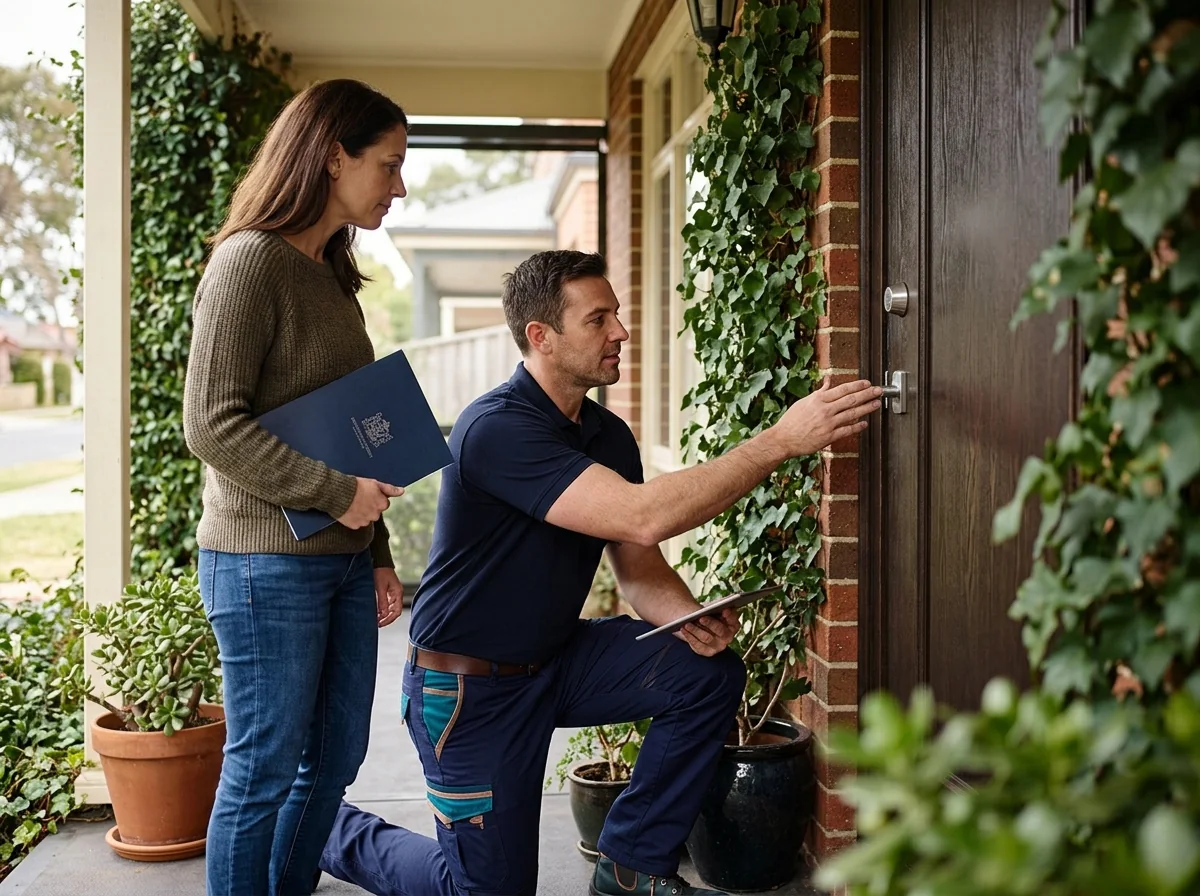
When the technician arrives, a few quick observations tell you a lot. Look for a marked vehicle, a company uniform or ID, and a business name that matches the one you called and can be tied to a real local presence rather than a generic 'locksmith near me' front. Be wary of cash-only demands, refusal to provide a written invoice, or pressure to decide instantly. It is completely reasonable to ask for identification and a printed estimate before they start, and to verify the license as described in our California licensing guide. Trust the mismatch: if the friendly phone quote and the person in your driveway do not line up, stopping the job and calling a verifiable local locksmith is far cheaper than paying a padded bill under pressure.
It usually starts with an ad or a top search result showing an unbelievable price, something like a flat lockout fee that looks far below the local norm. When you call, a distant call center agrees to it, then dispatches whoever is nearest, often an unmarked car with no company name. On arrival, the story changes: your lock is suddenly 'high security' or 'has to be drilled,' the quoted fee was 'just the service call,' and the real total climbs into the hundreds, frequently demanded in cash. A skilled, honest locksmith can open the overwhelming majority of standard residential locks without destroying them, so unnecessary drilling of an ordinary deadbolt is one of the loudest warning signs that you are being worked over rather than served.
The single most effective defense is a specific, itemized quote agreed to before dispatch. Instead of accepting a vague 'starting at' figure, ask for the total you should expect for your exact situation: a residential lockout on a standard deadbolt at this time of day, including any service or trip fee. Prices vary with the hour, the complexity, and whether it is a holiday or overnight call, which is why a specific itemized quote matters more than a low headline number. Ask them to confirm there are no additional charges without your approval, and if the price story shifts once the technician arrives, you are within your rights to decline and send them away before work begins.
When the technician arrives, a few quick observations tell you a lot. Look for a marked vehicle, a company uniform or ID, and a business name that matches the one you called and can be tied to a real local presence rather than a generic 'locksmith near me' front. Be wary of cash-only demands, refusal to provide a written invoice, or pressure to decide instantly. It is completely reasonable to ask for identification and a printed estimate before they start, and to verify the license as described in our California licensing guide. Trust the mismatch: if the friendly phone quote and the person in your driveway do not line up, stopping the job and calling a verifiable local locksmith is far cheaper than paying a padded bill under pressure.
Call (650) 489-0999 and describe the situation, your exact location, and what you need. Timing is confirmed on that call rather than promised in advance.
Call for help: (650) 489-0999 — a straight answer and an honest estimate before any work begins.